














Now Reading: Jalal Charaf: Aligning Human Purpose with Organisational Strategy
-
01
Jalal Charaf: Aligning Human Purpose with Organisational Strategy

Jalal Charaf: Aligning Human Purpose with Organisational Strategy
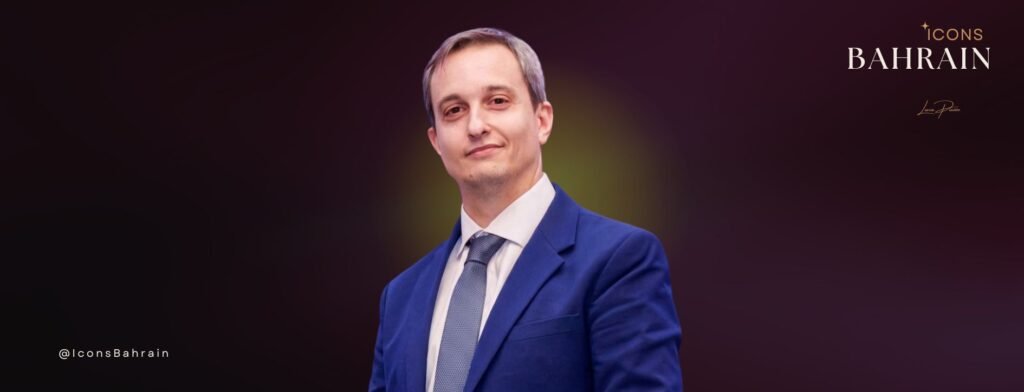
Jalal Charaf navigates the complexities of institutional leadership by applying a clear philosophy: define a purpose, build a capable team and ask the right questions. His professional journey began in the world of engineering and structural building, an era that shaped his understanding of physical systems and hardware.
However, transitioning into the manufacturing sector early in his career, he discovered that sustaining any enterprise requires a parallel mastery of what he calls the software of the human world. This balance between technical logic and human-centric management has become the hallmark of his executive career, allowing him to solve complex problems in diverse environments ranging from family-owned businesses to national institutions.
Bridging Industry and Institutional Governance
His leadership roles often focus on transforming how organisations function, whether in the private sector or within large-scale public institutions. As the former CEO of the General Confederation of Moroccan Enterprises (CGEM), he led a team dedicated to digital transformation. By focusing on data-oriented processes, he helped the confederation improve service delivery for members, particularly SMEs.
This effort demonstrated his commitment to making institutions more agile and responsive to the needs of the businesses they represent. He viewed his tenure as a privilege to lead passionate individuals across sectoral federations and regional unions.
His approach at CGEM involved working with a permanent team to coordinate a parliamentary group and various thematic commissions. This role required navigating the interests of both the public and private sectors, acting as a bridge between government stakeholders, unions, and foreign counterparts. By modernising the confederation’s internal processes, he sought to ensure that every decision was supported by accessible data. This shift was fundamental to his promise to be useful to every enterprise in the Kingdom.
Institutional resilience is rarely a product of static systems but rather the result of a deliberate, data-driven effort to remain agile in a shifting economic landscape.
Connecting Data to Professional Growth
At the Observatoire Métiers et Compétences (OdB), he directed the production of data intended to align professional training with the realities of the market. By clarifying the skills required for both current and future jobs, he supported stakeholders in making informed decisions about training curricula and long-term sector policies.
This work underscores his belief that institutional success depends on bridging the distance between academic learning and the practical demands of the workforce. By producing actionable insights, he helped stakeholders calibrate training offers to match regional and national requirements.
His IFC experience includes identifying and managing development projects with associations and government institutions. Separately, at OFPPT from 2005 to 2007, he managed the in-service training reimbursement system and enterprise-training strategy, alongside organisation and IT responsibilities.
Human-Centric Talent Strategy
During his time at the OCP Group as a sponsor of Talent & Organizational Development, he viewed personnel as a community needing meaningful work to thrive. His approach to talent strategy was designed to ensure that individual well-being and professional growth contributed directly to both the group and society.
At OCP Group, his talent-strategy responsibilities concerned employees’ wellbeing and meaningful work for individuals, the group and society.
Earlier, Charaf led agricultural activities at Les Domaines Agricoles. In his professional summary, he describes an agricultural leadership period in which revenues and profits tripled over nine years; this remains a self-reported result.
His agricultural responsibilities included aromatic plants and extracts, honey and beekeeping, and aquaculture. He also founded Atlassence to develop sustainable sourcing solutions for the fragrance and flavours industry.
True organizational impact emerges when leaders create environments that allow professionals to connect their daily contributions to a broader, meaningful social vision.
Driving Innovation Through Education
His UM6P experience includes the roles of Chief Digital & AI Officer and Executive Dean of Business & Management. The description of the latter centres on research, learning and real-world challenges, with artificial intelligence as part of its approach to talent and organisations.
This academic role allows him to foster a landscape where research informs real-world problem solving, reflecting his interest in rethinking business models for the modern era. His work at UM6P connects the hardware of digital tools with the software of organizational culture.
Recognition by Icons Morocco
Jalal Charaf possesses a unique background that spans from managing essential oils and fragrance manufacturing to steering the national policy voice for Moroccan enterprises. His career is marked by a consistent effort to apply rigorous strategic thinking to diverse sectors, including agriculture, vocational training and industrial development.
Appointed Minister of Tourism, Handicrafts and the Solidarity Economy on 16 October 2026, Charaf brings experience across manufacturing, agriculture, vocational training, business representation and higher education to the role.